AI in estate agency: Why the future is 'high skill, high tech'
Estate agents invest heavily in generating leads. From property portals and digital advertising to social media and their own websites, considerable time and budget goes into encouraging prospective buyers, sellers, landlords and tenants to make contact.
But generating the enquiry is only half the battle. What happens when there's nobody available to answer it?
With more enquiries arriving outside traditional office hours and branch teams already juggling competing demands, AI has an increasingly important role to play. Not by replacing estate agents, but by helping make sure their time is spent where it matters most.
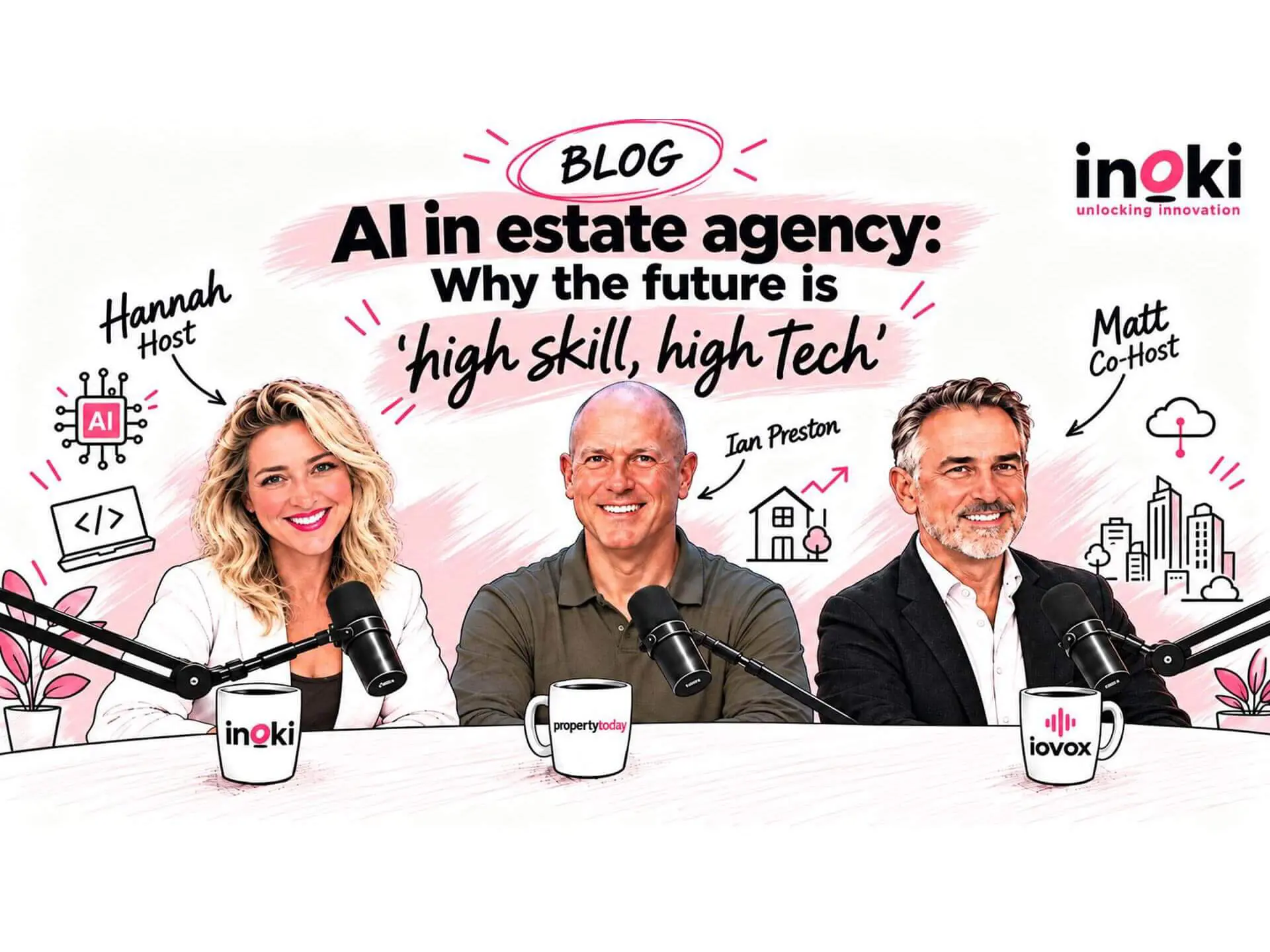
It's a topic we recently explored on The Property Stack, sponsored by iovox, where iovox Chief Commercial Officer Matt Gayleard joined estate agency entrepreneur and PropTech innovator Ian Preston and host Hannah Parker, founder of property marketing agency Inoki.
Ian described his vision for the future of estate agency in four words: "high skill, high tech."
It's a simple way of describing where the industry could be heading: technology taking care of more high-volume, transactional activity, while skilled people have more time for the conversations where experience, judgement and reassurance make the biggest difference.
The problem isn't generating leads. It's what happens next
The way customers contact estate agents has changed significantly. Enquiries don't conveniently arrive between 9am and 5pm, and they certainly don't all come through the same channel.
Ian highlighted data suggesting that 65% of digital portal leads now arrive outside office hours. At the same time, an agency transacting on around 100 properties a year could be handling approximately 10,000 phone calls.
That creates a significant volume of customer contact for already busy teams.
The same challenge is visible in the call data iovox sees across real estate and other high-intent sectors. Around 50% of inbound calls don't reach their intended recipient.
That means businesses can invest heavily in generating demand, only to risk losing the opportunity at the point a prospective customer actually gets in touch.
But the most useful question isn't simply how many calls are being missed? It's which calls are being missed?
Was the caller responding to a particular property listing or marketing campaign? Did they call outside office hours? Were they asking a routine question, or were they ready to book a viewing, arrange a valuation or speak to an agent?
Understanding the context behind those conversations gives agencies a much clearer picture of where opportunities are being generated, where they are being lost and where technology could help.
This is central to iovox for Real Estate: helping businesses understand where calls come from, what happens during those conversations and how they can act on that insight.
Not every call needs an estate agent
For one business Matt discussed on The Property Stack, around 70% of incoming calls were relatively routine and could potentially be handled using existing FAQ-style information. The remaining 30% represented more valuable enquiries requiring human expertise.
Without effective triage, however, they can all end up competing for the same attention.
That's where the idea of "high skill, high tech" becomes particularly relevant.
Think about the different interactions an estate agency handles every day. Negotiating an offer, advising a vendor, progressing a complex sale or reassuring someone through a major decision all benefit from the skills and experience of an agent.
Confirming a viewing, answering a routine question or capturing an enquiry after the office has closed still matters to the customer, but it doesn't necessarily require that same level of expertise.
Using AI to handle more of those transactional interactions can free agents to concentrate on the conversations where they add the greatest value.
What if AI replaced voicemail instead?
The conversation around AI often jumps quickly to whether technology will replace people. In estate agency, there's a much more immediate opportunity: replace poor customer experiences instead.
Voicemail is a good example. For one iovox customer, 90% of callers who reached voicemail hung up. When calls were instead answered by an AI voice agent – which clearly identified itself as AI and was there to triage the enquiry – 92% stayed on the line.
The AI wasn't replacing a member of staff. It was replacing an answering machine. Instead of abandoning the call, customers could explain what they needed, have their enquiry captured and know that the right person could follow up.
For estate agencies, that creates an opportunity to capture demand when branch teams are already on calls, speaking with customers face-to-face or simply when the office is closed.
More technology can create more time for people
Property remains a fundamentally human business.
Buying, selling, renting or letting a home can involve major financial decisions and plenty of emotion. There will always be conversations where customers want experience, judgement, reassurance and a person they trust.
The opportunity with AI isn't to remove those interactions. It's to create more capacity for them.
If technology can help manage volume, capture enquiries, answer routine questions and direct customers to the right place, agents can spend more of their working day building relationships, advising clients and progressing opportunities.
That can create a better experience for employees as well as customers. Rather than expecting teams to be constantly available across calls, emails, portals and other digital channels, technology can absorb some of that pressure.
Start with the problem, not the technology
For agencies exploring AI, the starting point doesn't need to be a major transformation project.
Instead, look at what is already happening across the business.
How many calls and digital enquiries are coming in? When are they arriving? How many are being answered? What are customers asking? Which enquiries require an experienced agent, and which are repetitive or transactional? Where are teams spending time on activity that could be handled differently?
Once agencies understand those patterns, it becomes much easier to identify where AI could genuinely improve the customer journey and support their teams.
Because the future of AI in estate agency shouldn't be about automating for the sake of it.
It should be about creating the right balance between high skill and high tech: using technology to manage more of the volume, while giving people more time for the moments that matter.
Hear the conversation on The Property Stack
Hear more about the "high skill, high tech" approach in Episode 2 of The Property Stack, sponsored by iovox, featuring Matt Gayleard, Ian Preston and host Hannah Parker. The conversation explores missed leads, voice AI, agency data and where estate agents can start with automation.
Listen to Episode 2 of The Property Stack for the full conversation, or explore iovox for Real Estate to discover how iovox can help you capture, understand and act on more customer conversations.